Wednesday, March 23, 2016

British Navy destroys Kwakiutl Village in 1865

Published in the North Island Gazette March 23, 2016.
During the initial colonization period on the Pacific Coast in the 1800s, the British Navy was known for its harsh actions. Today academics refer to this as the era of "gunboat diplomacy."

From 1848 - 1866 the Colony of Vancouver Island was the recognized governing body on Northern Vancouver Island.  There was a disjoint, however, in that the Colony had little resources to defend itself, and relied heavily on the presence of the British Navy, which at any time might have numerous war ships in the area.
HMS Clio


One of these vessels was the HMS Clio, a steam-powered Pearl class corvette with 22 8 inch cannons and one pivot-mounted 10 inch cannon mounted on her bow, 1472 tons, and 400 hp.  The Clio was based at the Pacific Station in Esquimalt, and would run regular patrols up and down the coast.

On December 22, 1865 the ship had run to Metlakatla and was returning South when it stopped to check in at the Hudson's Bay Company's Fort Rupert.  Staff at the Fort lived in very close proximity to the First Nation village of Tsakis, which was home to about 1500 people. At times the relationship was rocky, with both sides engaging in vigorous trade, but suffering regular skirmishes prompted by the illegal whisky trade, cultural differences, and frustration with the encroachment of Europeans into First Nations' traditional territories and the utilization of the resources within these areas.

Beaver Harbour, the location of Fort Rupert, had been used by the local First Nations people for thousands of years, as evidenced by several large shell middens in the area, but it had not been a large permanent year-round village site at the time of the establishment of Fort Rupert. The availability of trade goods and preferred status trading with the Hudson's Bay Company prompted the Kwakiutl to establish a large permanent settlement on both sides of Fort Rupert after its construction. In 1851 Governor Douglas signed Treaties (two of the 'Douglas Treaties') with the bands that lived adjacent to the Fort, the Queackar and the Quakeolth. 

When the Clio entered Beaver Harbour in December 1865 a number of members of the Nahwitti First Nation awaited her arrival.  They alleged that Kwakiutl men had murdered one of their clan.  They had come seeking retribution, but Mr. Compton of the Hudson's Bay Company had convinced them to await the arrival of the Clio, and they had been assured that the men accused of the murder would be taken down to Victoria for a trial.

When the Clio arrived Captain Turnour attempted to take the Kwakiutl suspects into custody, but the community refused to hand them over.

Turnour threatened to open cannon fire on the village, but the community still refused to hand over the men and attempted to scare the Navy away by brandishing large knives.  The Clio let off a volley of shots into the village. The First Nations took down their flags and raised a white flag and the assault was halted.

That evening the First Nations started to move their belongings into the woods behind their village.   They also called on the Fort and told the HBC employees that they would surrender the wanted men, but the Fort employees refused to open the gates of the Fort, wary of being taken hostage in the dispute.
Painting "The Clio at Fort Rupert" by artist Mike Sedgemore  provided by Hutch Hunt Sr.

In the morning the Navy once again sent launches to Tsakis demanding that the community hand over the suspects.  They handed over one of the three suspects, but refused to bring forth the other two men.

At this point the Clio's First Lieutenant started lighting First Nation's big houses on fire, and entered the remaining houses, seizing and destroying a quantity of rum. When this did not elicit the desired response the Navy officers returned to the Clio and the ship let fly a full barrage of cannon-fire on the village.   Navy destroyed the community's houses as well as all of the canoes on the beach.  It is estimated that somewhere in the neighbourhood of 80 canoes may have been destroyed.  Canoes were essential to life on the coast at this time including basic food gathering. This action was devastating for the Kwakiutl.

When officers once again returned to the village, the community still refused to hand over the requested men, and instead the Clio took six or seven men into custody by force (one European man travelling on the Clio described it as the Navy 'taking hostages'), and delivered them to Fort Victoria.  All the men were later released, but their situation prompted a debate in the legislature about whether they should be financially compensated for their loss, and whether the the Navy acted appropriately.

The Kwakiutl repaired and rebuilt their houses, again in close proximity to the Fort.   On a number of occasions cannons were fired upon the Kwakiutl, and one original cannon and a number of cannon balls from the period of the Fort are still in the possession of the community. Local stories are told of First Nations returning the cannon balls to the Fort being paid for their return.  The Fort was sold in the late 1870s to former HBC employee Robert Hunt.
____________________________________________
Thanks to Hutch Hunt Sr. for suggesting the attack of the Clio on Fort Rupert as an idea for further exploration.  He was told this story by his father Johnathan Hunt, who heard the story from his father.

http://bcgenesis.uvic.ca/getDoc.xml?id=V66035.scx

http://archive.org/stream/dailycolonist18660106uvic/18660106#page/n2/mode/1up/search/fort+rupert+clio
https://archive.org/stream/dailycolonist18651229uvic/18651229#page/n1/mode/2up/search/Clio+Fort+Rupert

Wednesday, February 17, 2016

Adventures in memory through the old North Island

In the late 1970s and early 1980s Judy MacCallum did the North Island a great service by writing a history column in the North Island Gazette that included interviews from many early pioneers in the area.
The columns are a gift to those interested in doing further research or just interested in the unique characters who helped to make the North Island what it is today.
The columns are available through the Google News newspaper search function.  Dates of the columns and links are provided below.
I have not been able to contact Ms. MacCallum myself, but I would love to be able to thank her for this wonderful collection.

Adventures in Memory through the old North Island

Chapter 1: December 12, 1979
"The day the cougar chased the dog through the house"
Chris Sondrup's memories of life at Cape Scott.

Chapter 2: January 16, 1980
"How one founding family spent the early days here"
The history of the Hole family from Coal Harbour. as told by Ken Hole. In 1912 Albert Hole took up a homestead at Nahwitti, and the family later moved to Coal Harbour. Part I.

Chapter 3: January 30, 1980
"There were always people you could go to for help"
The history of the Hole family - Part II.

Chapter 4: February 13, 1980
"$5,000 in silver stuffed behind a chair and forgotten"
Tex Lyon's reminisces, part I.

Chapter 5: February 20, 1980
"I don't want to get that civilized: it's still possible to live off of the land"
Tex Lyon's reminisces, part II.

Chapter 6: April 2, 1980
"Setting up housekeeping in a tent in the days before company houses"
Stories of early settlers to Port Alice.

Chapter 7: April 16, 1980
"A mere 68 years later the great Hardy Bay land fraud becomes a con come true"
An overview of the Hardy Bay Land Co. and the land sales fraud which lured many unsuspecting families to the North Island.

Chapter 8: April 30, 1980
"Mother-in-law float house: when we moved we just towed her along"
The storey of the Halliday family.

Chapter 9: May 14, 1980
"You went to meet every boat - it didn't matter if it was 2 o'clock in the morning"
Memories from Jessie Roland, daughter of pioneer Nils Gunderson.

Chapter 10: May 28, 1980
"The pilot was digging clams, but the tide came in and the plane floated down the inlet"
Stories from Don Thompson, president and co-founder of Alert Bay air services.

Chapter 11: June 11, 1980
"There's many a wonderful thing we haven't found yet"
The story of pioneer Jim Cordy, one of the last residents who homesteaded along the Holberg - Cape Scott trail.

Chapter 12:June 25, 1980
"When dad ran out he rowed to Port Hardy for more tobacco"
Stories about the founding of Fort Rupert and recollections of Vivian Hunt.

Chapter 13: July 16, 1980
"Nearly 70 years ago Claus Botel fled German inflation"
The story of Claus and Martha Botel as told by their daughter Anna Botel Hole.  The Botels first homesteaded on the West Coast at Topknot Point, and later moved to Quatsino Sound.

Chapter 14: August 13, 1980
"He would have turned right around and gone back"
Carl Johnson talks about his memories of growing up in San Josef and Quatsino.

Chapter 15: August 27, 1980
"Sitting Bull's bullet ridden cabin led Chris Nordstrom to Chicago and then Quatsino"
The story of how a group of Danish settlers founded the utopian colony of Quatsino.

Chapter 16: September 10, 1980
"It was mostly the men who liked living here then"
Ida Pugh talks about the early pioneer days in Port Hardy.

Chapter 17: September 24, 1980
"The house sank when the winds broke up the float"
Pioneer Timber and the early history of Port McNeill.

Chapter 18: October 16, 1980
"Dreams of a socialist utopia on a rainforest island"
The history of Sointula.

Chapter 19: October 29, 1980
"Wire was strung on trees right to Telegraph Cove"
Fred Wastell talks about his memories in the early days of Alert Bay and Telegraph Cove.

Chapter 20: November 30, 1980
"Dong Chong delivered groceries by wheelbarrow"
The story of pioneer grocer in Alert Bay.

Chapter 21:December 10, 1980
"English funnies and shuffleboard when Norah arrived"
Phil Watson talks about life in early Port Alice.

Chapter 22: January 7, 1981
"There used to be 10,000 salmon a day from the Keogh"
The story of the Anderson family of Sointula.

Wednesday, January 13, 2016

Jokerville


Published in the North Island Gazette January 13, 2016.
When World War II came to Northern Vancouver Island, it meant big changes for the area, including the construction of a military base and the influx of a large number of air force personnel.
An historic air photo of the Port Hardy airport, with Thomas Point on the bottom left. 
An area just south of Port Hardy was selected for one of four air bases constructed on Vancouver Island at this time (1941). Originally known as a Royal Canadian Air Force (RCAF) station (bomber reconnaissance) and Home War Operational Station it was later designated a Staging Unit (no 21).
As with other bases, the wives and girlfriends of enlisted men and officers were generally not provided housing on the base.
In areas close to towns, the servicemen's girlfriends and wives could relocate close to the base, but in remote locations like Port Hardy small makeshift communities sprang up for those who wanted to set up house.
During base construction lumber was easy to come by.  Men took remnant lumber and built shacks, which generally didn't have running water, and consisted only of a front room, a bedroom, and an outhouse.
By 1945 a motley collection of these buildings had sprung up just off the air force base lands by the RCAF dock/ barge ramp, just to the north of Thomas Point.  
Called 'Jokerville,'  the shacks were built both by enlisted men and American employees of PanAmerican Airways, which used Port Hardy as a refueling stop on flights to Alaska.  
The Americans reportedly rigged up a generator and plumbing to supply electricity and gravity-fed water from a nearby spring to the cabins, but when the introduction of larger airplanes cancelled the necessity of a PanAm stopover in Port Hardy the Americans took their generator away. 
Cabins changed hands when personnel were transferred.  At the time one of  these squatters cabins could be purchased for about $300, and that included any furnishings the previous owner had acquired.
The RCAF stored their coal (used to power the base's generators) on a barge attached to a dock right at the end of the Jokerville Road, which was convenient for those trying to heat their poorly insulated shacks.  A couple of kind words to the watchman would get you a bucket of coal for free.
Shopping was done at the Cadwallader store at the site of the old Fort Rupert, which was only a short walk away, and received orders by steamship every ten days.
Air photo showing the RCAF base at Port Hardy.
Visitors usually arrived by ship in Port Hardy, then traveled by military vehicle over a bumpy road with a number of narrow bridges that some people called the "Burma Road," which led to the base and to Jokerville. Some referred to the collection of tar-paper shacks as a 'squatters town.'
There were parties and gambling in the community, but many of the servicemen were just happy to have a place to stay with their wives.  Sometimes groups of boys from the base would come to Jokerville looking for a party, were the rules of the military were relaxed.  
Many of the wives found the accommodations cozy, and there was an active social life as many inhabitants got together every day, usually at the house with heated water. 
Wild animals were frequent visitors to the village, with more than one story being told of a prized fish, recently caught, being stolen off a front porch by a hungry bear or cougar. This was often a surprise to the 'city boys' in the Air Force, many of whom were not accustomed to living in the wilderness.
At the end of the war most of the original Jokerville residents walked away from their shacks in a return to civilian life, but in the 1960s the area was populated again, this time by hippies.  Today the area is a part of Kwakiutl Indian Reserve - Thomas Point 5, although many local people still refer to the area as Jokerville.
In 1944 a Toronto Grade 11 student, presumably after a trip to the area, captured these thoughts about Jokerville as a writing assignment published in their high school year book: 
"From early morning, to late evening the hoarse croaking of crows is heard mingling
 in an unearthy din of barking dogs, squalling cats, and huge 
American bombers which fly overhead every day—all day. 
This is Jokerville, 
the “metropolis” of North Vancouver Island."

References
Emmott, NM. Jokerville in Raincoast Chronicles Eleven Up (Howard White, Editor). Issue 13. Harbour Publishing. 1994. p. 186-191.
http://www.mocavo.ca/Vox-Fluminis-Riverbend-School-for-Girls-1944/849974/35
http://www.101nisquadron.org/wp-content/uploads/2015/10/RCAF-Port-Hardy-30-X-30-plaque-v6a.pdf
Thanks to George Kearey for his memories of walking through Jokerville in the 60s/70s.

Wednesday, November 4, 2015

Mungo Martin - Ambassador to the Kwakwaka'wakw Culture

Published in the North Island Gazette November 4, 2015.
Mungo Martin was a master carver and prodigious defender and recorder of the Kwakwaka'wakw culture in the early part of the twentieth century. He may be best remembered for his work to preserve his culture, bringing it to a new and broader audience, at a time when many were concerned the old arts were dying out.
Mungo Martin, also known as Nakapenkem (which in Kwak'wala means 'a potlatch chief ten times over') or Datsa (grandfather) was born at Fort Rupert (Tsakis) in 1879.
Martin's father, Yaxnukwelas, was a high raking chief from Kwikwasut'inuxw (Guilford Island), and his mother, Q'omiga (Sarah Finlay), was the daughter of a Hudson's Bay Company employee and a Kwakiutl woman.
When Martin was born his parents performed rituals in order to help him to be artistic and musical. At the time, these types of rituals were common when babies were born.
From a young age Martin was an active participant in the Kwakwaka'wakw culture at Tsakis. He was said to have taken a keen interest in cultural practices even as a child.
When a teenager, Martin's father died. His mother married again, and Martin's new step-father was Yakuglas (Charlie James), who was a skilled carver.
As a young man Martin spent time commercial fishing. He also trained under his step-father. One of his first commissioned totem poles, called "Raven of the Sea" was raised in Alert Bay around the year 1900.
He married Abayah Martin, who was a talented weaver.
In the early 1900s the skill of carving was becoming somewhat of a lost art, as the implications of the Canadian laws restricting First Nations potlatching and other cultural ceremonies took their toll. Museums began to attempt to collect and preserve the remaining examples of totem poles, house posts, and ceremonial regalia, many of which were decaying outside in the west coast weather.
The University of BC hired Martin to work on restoring and recreating a number of poles which it had in its collection in 1949. On May 16, 1951 Martin participated in an unveiling of a collection of First Nation totems and house poles at Totem Park on Marine Drive in Vancouver. He spoke about the importance of preserving the historic Kwakiutl culture.
Mungo Martin in 1949
Martin was then hired by Wilson Duff of the Royal BC Museum to create replica poles of the collection of totem poles in Thunderbird Park in Victoria in about 1952.  He initiated the work, which was also carried on by Henry Hunt, Richard Hunt, and Tim Paul.
One of the unique things about the Royal BC Museum work was that it was all carried out in a carving shed on the museum grounds.
Along with totem poles and other ceremonial items, Mungo Martin built Wawadiťła (the Mungo Martin House) on the museum grounds in 1953.  While built in the traditional style, the house is a living link to Kwakwaka'wakw culture, and is still used for cultural purposes to this day by Martin's descendants.  The house was modelled after Chief Nakap’ankam’s house at Tsakis.  Martin was also a singer, and was recorded singing a number of traditional Kwakwaka'wakw songs.
In 1958 Martin designed and was the lead carver on a totem pole presented to the Queen of England in celebration of the 100th anniversary of British Columbia.  The totem was erected in Windsor Great Park in England.
Martin in about 1962.
Martin died in 1962 in Victoria.  His body was transported by a Canadian Navy ship to Alert Bay, where he was buried.


Info about Mungo Martin's time at UBC:

http://www.library.ubc.ca/archives/aboriginal/
A movie about Mungo Martin's carving, from 1963, is available here: https://www.youtube.com/watch?v=wMWIcxkTMu8.

Wednesday, October 7, 2015

The Wreck of the HMCS Galiano

Published in the North Island Gazette October 14/15.
As October storms wreak their fury on the coast, some may remember the story of one particularly fierce storm almost a hundred years ago, that took the lives of 40 people in the only sinking of a Canadian naval vessel during the Great War.
Her Majesty's Canadian Ship (HMCS) Galiano, was built in 1913 in Ireland as a Fisheries Service vessel.  It was a sister ship to the HMCS Malaspina.  She was 162.3 feet in length with a beam of 27.1 feet.
HMCS Galiano (BC Archives photo)
After sailing around Cape Horn to arrive in Victoria the Galiano had only a short life in the Fisheries Service before the ship and its crew were re-assigned to the Canadian Navy and Naval Reserves when the war broke out in 1914.
The Galiano was not supposed to be north of Vancouver Island that October evening in 1918, but the Malaspina was in need of repairs and was confined to the dock at Esquimalt, so the Galiano was tasked to bring much needed supplies in to the lighthouse and wireless station at Triangle Island.  The station was apparently running dangerously low on fuel.
As the ship was taking on coal in Ladysmith a number of her crew came down with the Spanish Influenza, and a number of new sailors and officers had to be taken on from other vessels to make up her normal complement of about 40.
As a result, a number of the crew taking the ship to Triangle were from other vessels, some only boarding at the last minute.
As the Galiano set off North of Vancouver Island, it was clear that the weather was not going to be good.  In what has been described as a raging hurricane, the ship set off as the weather was reported to be 110 knot winds with 45 foot seas.
In addition to supplies, the ship was bringing a new housekeeper to replace Emily Brunton, who had been working at the wireless station and had not left Triangle Island for the last 18 months.
 Doug Bate and Arthur Hume on the Galiano.  Both men, from New Westminster, perished when the ship was lost.
The Galiano managed to make it to Triangle Island, and tucked into the East anchorage while the supplies were unloaded and the passengers embarked and disembarked via tender. When the winds started to pick up the crew quickly offloaded the last of the supplies they were carrying at the bottom of the tramway system and hurried back to the ship. They departed approximately 5:00pm.
One wireless operator, Syd Elliot, had been on the beach prepared to leave with the ship, but at the last minute he received new orders and stayed on the Island.
The night shift was on duty in the radio room at 3:00am when the mayday call came in on the wireless from the Galiano: "Holds full of water; send help."
Ironically, the ship operator who sent the message, MJ Neary, had a brother who was a wireless operator at Triangle Island, MC Neary.  Originally the papers reported that he was the one who received the message, but it was later clarified that he was off-shift, sleeping at the time. The crew opted not to wake him to give him the news.
Authorities at the time estimated that if the ship were travelling at 10 knots they would almost have been within sight of the light of Cape St. James, at the southern point of Haida Gwaii, when the distress call was made.
All vessels within the vicinity were asked to search for the disabled vessel.  The next day, in stormy seas, one body was recovered along with a skylight (15 ft by 10 ft) from the Galiano's engine room.
Within the next couple of days two more bodies were found.  It was believed that the ship either foundered on rocks south of Cape St. James or turned offshore to await the dawn and was overtaken when a large wave washed over the ship, flooding it.
The rest of the wreck was never recovered. Forty lives were lost, and the Galiano became the only Canadian naval ship to sink during World War I.  There is memorial to the crew in the Ross Bay cemetery in Victoria.


"Search Raging Seas for Missing Galiano" in The Daily Colonist (Victoria), October 31, 1918. http://archive.org/stream/dailycolonist60y283uvic#page/n0/mode/1up
http://www.nauticapedia.ca/Articles/Rybak_Galiano_Wreck.php
http://www.oocities.org/gjesperson/galiano2.html

Friday, July 24, 2015

No. 10 Radio Unit at Cape Scott during WWII


Cape Scott is located on the north-western tip of Vancouver Island.  In the 1700s it was home to the Nakomgilisala Tribes, and in the 1800s the First Nations people in the area were collectively known as the Nahwitti, their populations much decimated by war and disease.
When most people think about Cape Scott, their minds will turn either to the present day park or the early Danish settlers who took pre-emptions in the area in the late 1800s/ early 1900s.
The Cape is of interest for other reasons of historical significance, one of which is the fact that it was home to a radar base (then known as a Radio Unit) in the 1940s.
One of the vessels used to supply the Radio Unit.
During the World War II there was a great deal of anxiety about a possible Japanese attack or invasion on Vancouver Island.  In July 1942 the Canadian military started construction on a base at the head of Cape Scott which was to serve as an early warning radar base looking for Japanese aircraft.  The station became operational on February 5,1943.
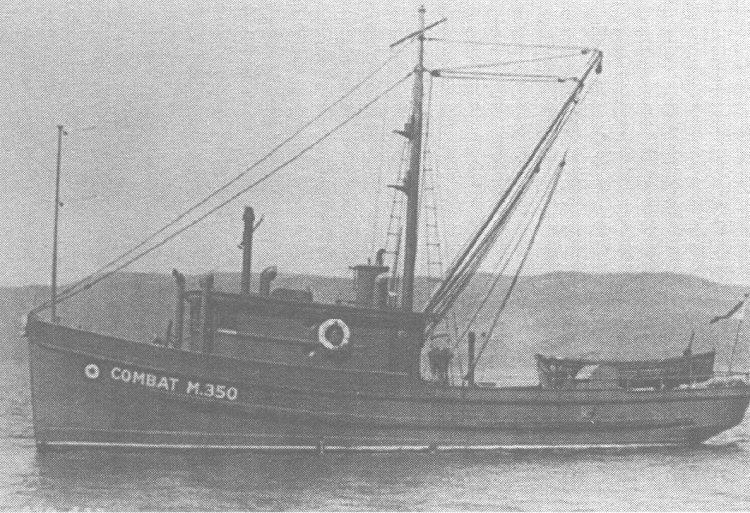
Military crews were sent to Port Hardy by steamship and then boarded a smaller vessel, usually the Combat (30 ft.), the Sekani (locally referred to as the ‘Sick Annie’), or the Haida, to travel around the north part of the Island.  These ships would anchor off-shore of Cape Scott and a skiff would be used to transport people and material onto the beach.  In bad weather the dory crew would wear wetsuits for the launch.  It wasn’t unusual for the skiff to tip over and for the passengers, mail, etc. to end up in the water.  Supplies were usually brought to shore by a barge which was hooked up to a tractor which would pull it in to the beach.  At times supplies and various pieces of military equipment were swept out to sea as the crew attempted to unload them in stormy weather.

The Radio Unit Building at the Cape.

The No. 10 Radio Unit at Cape Scott worked in cooperation with other units at Ferrier Point to the south, and Cape St. James and Spider Island to the North to provide continuous protection of Canada’s coast.  The radar unit was located at Cape Scott proper, near the current lighthouse, and the crew barracks were two miles inland, just inside the peninsula.  They were connected by a wooden plank road.
Close up of one of the Radio Unit Buildings.
The base was considered top secret.  The crew building the base used trees in the area to string their antennas.  The station included six crew barracks, sick bay, canteen(which doubled as a movie theatre), mess hall, the operations centre, washrooms, and a series of plank roads.  About 50 men were stationed at the base.  Each shift would have a separate barracks, so as not to disturb each other when some were working the night shift.
There were limited recreational opportunities in the camp.  At times the crew would walk the old corduroy road toward Holberg to attend dances.
Crew men in the living area.
The military sent in movies regularly, and they arrived with the mail. At times, when the supply ship couldn’t make it to shore, there was no new movie.  This was very distressing to the men who really looked forward to their movie nights and didn't like having to watch the same movie multiple times!
For recreation, the men tried swimming (too cold) and played ping pong. They cleared a volleyball court and would split into teams and have tournaments.  The group also set up a softball diamond. If the weather was good sometimes a team from the Port Hardy air force base would come and challenge the Cape Scott crew to a game.
The No. 10 Radio Unit was notoriously difficult to get to due to the weather and seas.  Many soldiers arrived without a lot of experience on the coast and wondered what they had gotten themselves into!
Crew men at Guise Bay.
At times, when ships couldn't get access the base, the military would use planes and would drop supplies in by parachute.
Crews on the station were mainly responsible for watching the radar for possible enemy invasions.  They didn't see a lot of action, although on more than one occasion a flock of geese was mistaken for a convoy of enemy Japanese planes.  They both flew in a similar formation!
One airman stationed at the beach said the crew were all surprised one day when a cow was delivered along with the normal rations.  No one at the base knew how to take care of the cow.  Then, one day the cow had a calf and certainly no one knew how to look after a calf, so the station's cook decided to make veal.  Unfortunately the cow was so distressed that she ran away and the crew were unable to find her.
In January of 1944 one diary from the site noted that it had rained so hard that the plank road was floating in places.
Plank road which connected the Radio Unit operations and the living areas.
The air men had to be quite self-sufficient, cutting wood for the boilers and cleaning their own clothes. The men also wrote a regular camp bulletin for their amusement called “The Isolationist."
The base was eventually decommissioned, after the surrender of Japan, in September 19,1945.

Thanks to John Coldwell For the photos from his Lighthouse Memories website and to the Pinetree Line website (the author, Ren L'Ecuyer passed away in 2005, but he did an amazing job amassing a wealth of information).

Thursday, June 25, 2015

Robert (Bob) Scott - A Friend to the North Island

Published in the North Island Gazette June 25, 2015.
Anyone who has lived in Port Hardy in the last 50 years will be familiar with the name Robert Scott. It has been prominently displayed on the former elementary school building anchoring one end of Market Street in downtown Port Hardy.
Most people who pass this building have no idea who Robert Scott was, or his significance to the North Island.
Robert Modal Scott was born in England around 1905. He dropped out of school at 15 years of age to start working.
In 1927 Scott emigrated to Canada, and for the first couple of years in his new country he worked in general stores on the Prairies.
In 1937 he moved to the coast, and worked in a store in Quathiaski Cove, on Quadra Island, for BC Packers.  There he met his wife Eileen. Eileen was born in New Westminister but grew up in Ocean Falls until her family moved to the Cove.
During this period Scott took it upon himself to learn Chinook, a trading language used by First Nations along the coast.
In 1938 he moved to Alert Bay, again to work for BC Packers.
He used his savings to buy "Smith's General Store" in Port Hardy in 1945 from Silas Pugh.  He changed the name to "Scott's General Store."  With the development of the Air Force Base (at the airport) during World War II, Bob Scott (as he was locally known) believed that it was only a matter of time until large scale development came to Port Hardy.
Robert "Bob" Scott

Scott built Port Hardy's first power plant with Buster Cadwallader, and was the first to bring electricity and refrigeration to a local store.
He eventually expanded to separate his grocery and hardware stores.  When Dong Chong built a larger grocery store in Port Hardy, Scott sold out his grocery and concentrated on his hardware interests.
Scott was the proud holder of account #1 from the first bank in Port Hardy, the Bank of Nova Scotia.
Although he was an entrepreneur, it was not Scott's business interests that endeared him to the communities on the North Island. He was a member of the local medical board, the Port Hardy Chamber of Commerce, the inaugural Port Hardy Parks Board, and the District Recreation Committee.  He was also a member of the Masons.
When Scott became a member of the School Board, there were two separate Boards for the Quatsino and Alert Bay school districts.  He played an important role in amalgamating the Boards and reducing duplication.
Scott took it upon himself to lobby the BC government for more funding for North Island schools. When Education Minister Bill Straith was travelling through Port Hardy on his way to Prince Rupert, Scott took him on a tour of Port Hardy's small two room schoolhouse to show him the need for better facilities.  The result was that the Board secured $500,000 for each of two new elementary schools in Port Hardy and Port Alice.
One of these schools, Robert Scott School, opened in the spring of 1954.  The original school fell victim to an arsonist in 1974 and was rebuilt on the same site.
The response wasn't all positive though, and Scott had to make some controversial decisions.  As a Port Hardy resident he heard a lot of complaining about the decision to build one high school, North Island Secondary School, in Port McNeill, but he believed it was the right location to support the tri-port area as well as Alert Bay, Sointula, and other outlying communities.
Scott is also remembered as being instrumental in securing the right for First Nations children to attend public school on the North Island.  He was honoured with the title "Giykumi" (Chief) by the Kwakiutl First Nation.
Scott was a school board trustee on the North Island for thirty years.
Interested in local history, Scott personally helped to finance a history book about Port Hardy called "A Whale of a Story." Sales of the book supported the local hospital fund.
In 1973 he retired, looking forward to a quiet life at Storey's Beach.
In October 1974 he travelled on holiday to Toronto to meet with his sister from Scotland.  He choked on his food while dining out at a restaurant.  He was rushed to the hospital but fell into a coma.  He was transferred to St. Paul's Hospital in Vancouver but sadly passed away November 14, 1974.

"Scott, Robert and Eileen" in A Dream Come True: Port Hardy 1904-2004. p. 193
"Pioneer Merchant Passes Away" North Island Gazette. November 21, 1974. p.6.
"Trustee Resigns after 30 years" in North Island Gazette. October 4, 1973. p. 10.